To address slow loading and unloading, IPC TPK will accelerate port digitalization in early 2026.
 Transporindo Admin•January 26, 2026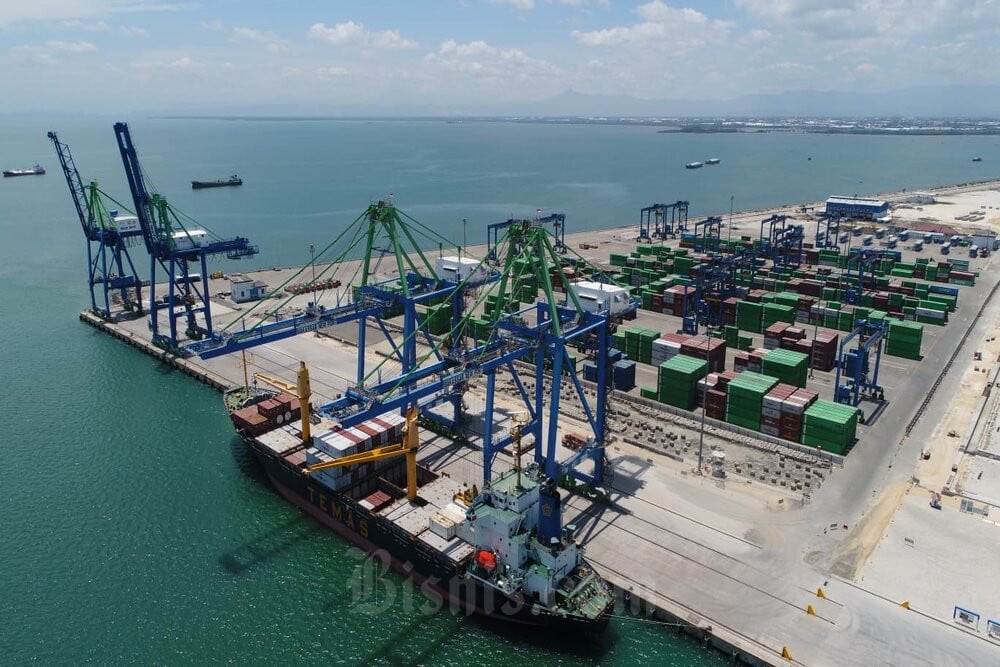
BERAU POST - Digitalization of port services is believed to be able to address the problem of slow loading and unloading services.
This has been a problem at several ports in major cities like Jakarta. This is why IPC Terminal Petikemas (IPC TPK) is focusing on accelerating service digitalization to speed up the loading and unloading process at container terminals while simultaneously increasing the efficiency and certainty of port services in 2026.
IPC Terminal Petikemas President Director Guna Mulyana stated that strengthening operations and services will be the company's primary focus in 2026. "Strengthening operations and services is a primary requirement so that IPC TPK can provide optimal benefits to service users, the public, and shareholders, while also strengthening the role of ports in supporting national logistics flows," he said on Monday (January 19).
This commitment is realized through the establishment of the company's 2026 theme, Operational and Service Excellence, as part of the implementation of the 2026–2030 Long-Term Corporate Plan Roadmap (RJPP).
Initially, Guna explained that IPC TPK prioritizes strengthening operational performance and service quality to ensure a more efficient, safe, and consistent loading and unloading process.
IPC TPK is also accelerating service digitalization through the implementation of the Terminal Booking System (TBS) to manage vehicle flow, the use of container scanners, and the implementation of the Nusantara Terminal Operating System (TOS) through the data-driven and integrated PARAMA and PRAYA systems.
In addition, IPC TPK is structuring its business model to strengthen its role as a container terminal operator within the Pelindo Terminal Petikemas (SPTP) Subholding. The company has also initiated a hub and spoke concept to improve inter-terminal connectivity and service cost efficiency. (jpg/smi)