Ship loading and unloading delayed by up to six days, causing productivity to decline.
 Transporindo Admin•February 2, 2026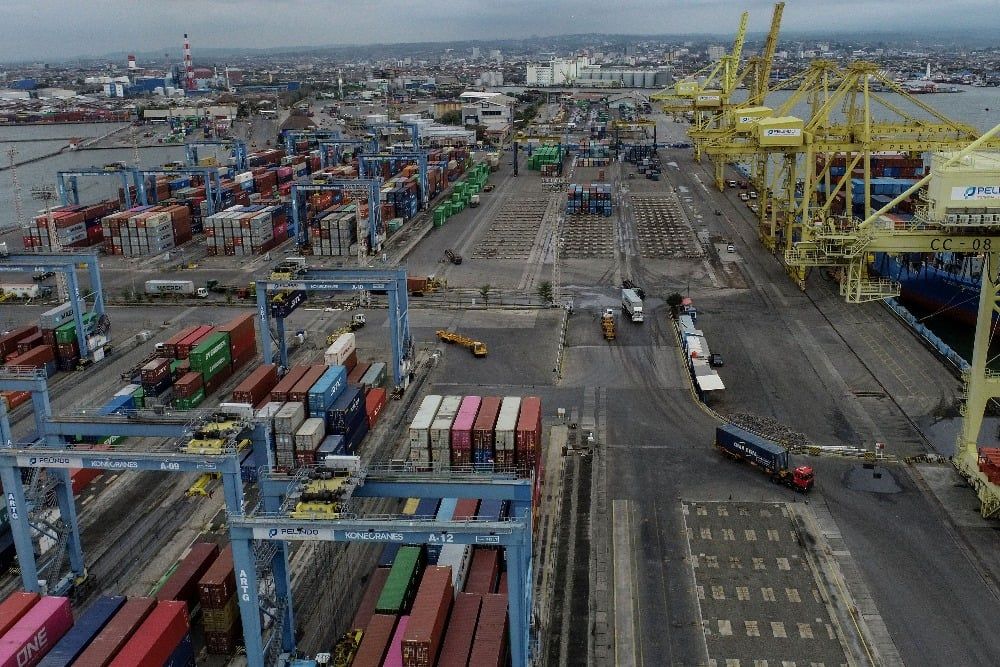
Delays in berthing and loading and unloading times at several ports have led to decreased productivity amidst increased logistics flows in early 2026.
According to Sebastian Wibisono, Chairman of the East Java branch of the Indonesian Logistics and Forwarders Association (ALFI), the delays in loading and unloading ships at several ports are due to frequent equipment breakdowns.
"Usually, the maximum waiting time for unloading is only three days, but now it can take up to six days. This is because some loading and unloading equipment is aging, such as at the Nilam Container Terminal (TPK) and the Mirah TPK at Tanjung Perak Port in Surabaya," he said on Saturday (January 31, 2026).
Sebastian added that the ideal Container Processing Area (CPA) should handle 30-40 containers per hour. However, due to loading and unloading constraints, it can only handle 10 containers.
Sebastian continued, saying that delays in loading and unloading processes also impacted shipping.
"Ultimately, there was a shortage of containers at several ports. Meanwhile, forwarding companies that had scheduled shipments were delayed," he said.
Similarly, Steven H. Lesawengen, Chairman of the Surabaya branch of the Indonesian National Shipowners' Association (INSA), added that delays in ship loading and unloading were also occurring at the Berlian Terminal (TPK Berlian) in Tanjung Perak, Surabaya, due to inadequate equipment.
Separately, the management of TPK Berlian and TPK Mirah have not yet commented on this matter. Meanwhile, the management of TPK Nilam in Tanjung Perak denied any damage to the loading and unloading equipment at the terminal.
Komang, a representative of the Semarang Container Terminal (TPKS), explained that the delays in ship berthing and loading and unloading were within reasonable limits and were influenced by external factors, namely the weather.
"Traffic did increase from December to January. This was compounded by unfavorable weather conditions, which hampered service delivery," he explained.
To mitigate the impact of delays and maintain the smooth flow of goods, TPKS has prepared anticipatory measures by adding several pieces of supporting loading and unloading equipment.
"We will add four container cranes and an additional 275 meters of pier, as well as several additional stacking areas. We hope this will increase terminal productivity and shorten ship waiting times," he concluded. (kir/saf/faz)